

Trends Shaping the Future of Pharmaceuticals
The pharmaceutical market is moving into a new phase: larger, more digital, more specialized, and more exposed to pricing and regulatory pressure. For executives, investors, policymakers, and healthcare strategists, the key is not simply that the sector is growing, but how that growth is shifting across therapies, regions, technologies, and business models.
What is driving the next phase of pharmaceutical growth?
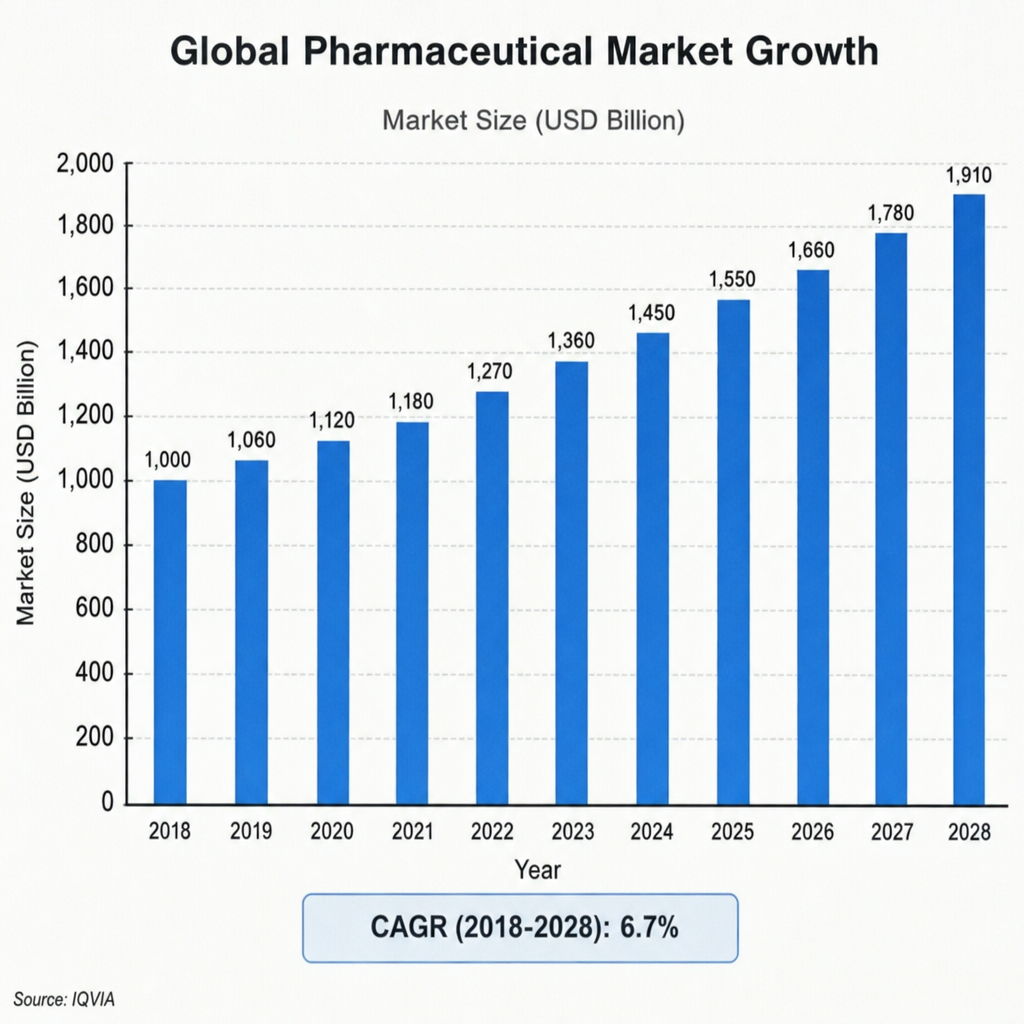
The next phase of growth is being driven by aging populations, chronic disease demand, biotechnology innovation, wider access in emerging markets, and stronger use of data across research and commercialization. Recent market estimates place the global pharmaceutical market size at about USD 1.74 trillion in 2025, with projections of roughly USD 2.78 trillion by 2033, showing why the pharmaceutical industry market remains central to global healthcare planning. (grandviewresearch.com)
Demand is also changing in quality, not just quantity. Cancer, diabetes, cardiovascular disease, obesity, autoimmune disorders, and rare diseases are pushing companies toward more targeted therapies, complex formulations, and long-term treatment models. That creates opportunities for premium innovation, but it also raises questions about reimbursement, affordability, and equitable access.
Market segmentation is becoming more strategic
The global pharmaceutical industry market size is often discussed as one large number, but strategy happens in the segments. Prescription drugs still form the backbone of industry revenue, while over-the-counter products benefit from self-care trends, pharmacy access, and consumer health awareness. Small-molecule drugs remain essential because they are scalable, familiar to regulators, and often suitable for oral administration, but biologics, cell and gene therapies, and biosimilars are reshaping the high-value end of the market.
Useful segmentation lenses include:
- Product type: prescription drugs, OTC medicines, vaccines, biologics, biosimilars, and specialty drugs.
- Molecule type: small molecules for scale and convenience; large molecules for targeted, complex disease pathways.
- Therapeutic area: oncology, metabolic disease, immunology, cardiovascular care, infectious disease, and rare disease.
- Route of administration: oral medicines for convenience; injectable and parenteral formats for biologics and advanced therapies.
- Age group: pediatric, adult, and geriatric needs, with aging populations increasing demand for chronic disease management.
- Region: mature markets that reward innovation, and emerging markets where access, affordability, and local manufacturing matter most.
Regional growth is shifting the competitive map
North America remains a leading pharmaceutical industry market because of high healthcare spending, deep capital markets, advanced R&D networks, and faster adoption of specialty therapies. The U.S. market alone was estimated at more than USD 630 billion in 2024, underlining the region’s importance to global revenue pools. (grandviewresearch.com)
Asia Pacific is increasingly the growth engine. Rising healthcare expenditure, expanding insurance coverage, government manufacturing incentives, and larger middle-class populations are changing where demand is created and where drugs are made. Companies that once treated emerging markets as volume-only opportunities now need more nuanced strategies: local partnerships, pricing discipline, regulatory capability, and portfolios that fit domestic disease burdens.
India deserves special attention. Government sources have estimated the domestic indian pharmaceutical market size at around USD 60 billion, while India’s pharma exports reached USD 30.47 billion in 2024–25 and went to more than 200 countries. That combination gives India a dual role: a growing domestic market and a major supplier to the global generics ecosystem. (pib.gov.in)
How are AI and biologics changing innovation?
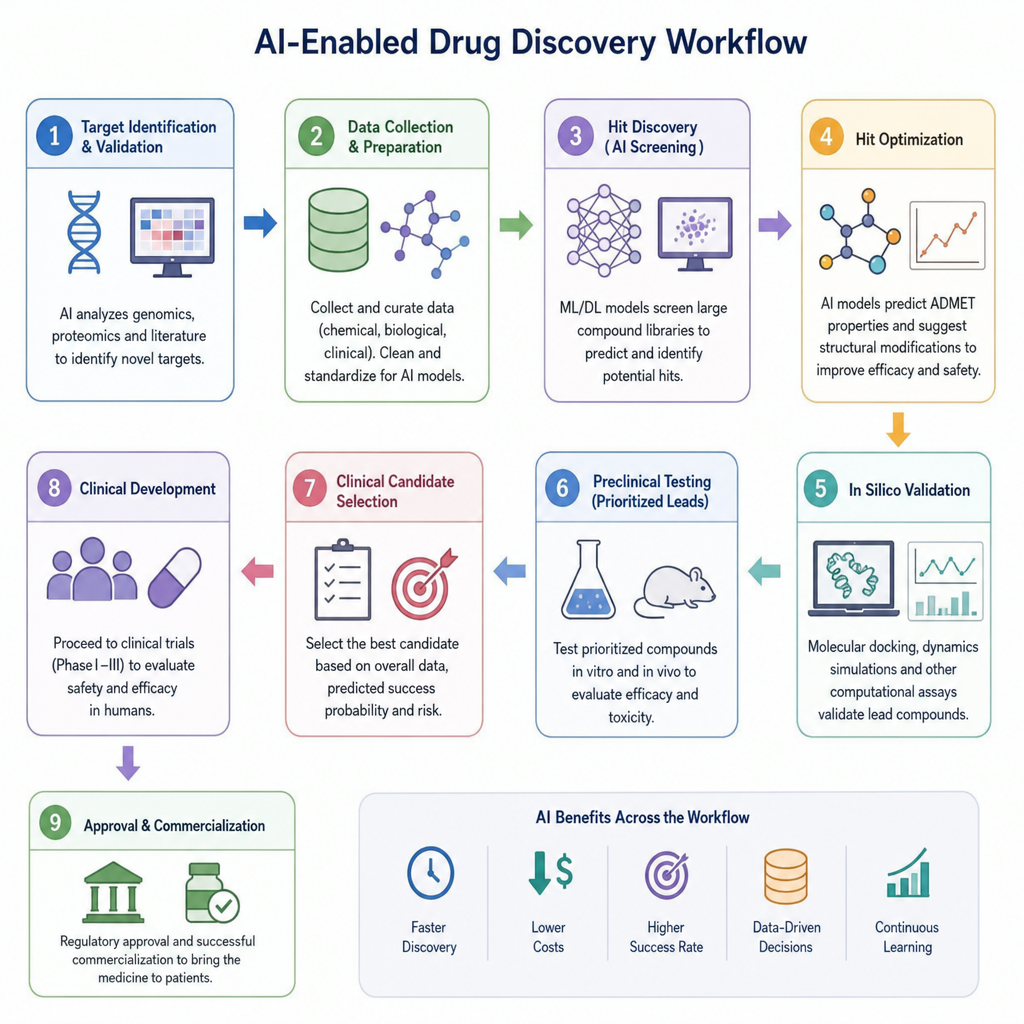
AI and biologics are changing innovation by helping companies search wider, test faster, and design more targeted therapies. AI is being applied to target identification, molecule design, literature review, clinical trial planning, patient selection, pharmacovigilance, and commercial forecasting, while biologics are expanding treatment options for diseases that small molecules may not address as effectively.
McKinsey has noted that generative AI could accelerate pharmaceutical research workflows and, in some discovery contexts, may help cut timelines substantially when paired with established tools such as virtual screening and knowledge graphs. The practical implication is not that AI replaces scientists; it changes the bottlenecks scientists work through. Better data infrastructure, stronger model validation, and closer collaboration between R&D, clinical, regulatory, and medical teams become competitive advantages. (mckinsey.com)
Biologics and biosimilars add another layer. FDA materials describe biosimilars as highly similar to already approved reference biologics and note that biosimilars can increase medication options and may cost less because developers can rely partly on the agency’s prior findings for the reference product. This supports competition in categories where biologic medicines can be clinically important but expensive. (fda.gov)
Stock market attention is following the science
The pharmaceutical stock market tends to reward companies that can combine durable cash flows with credible innovation. Large players such as Merck, Pfizer, Johnson & Johnson, Novartis, Roche, AstraZeneca, Sanofi, AbbVie, and GSK are often watched for pipeline depth, patent exposure, regulatory milestones, and capital allocation. Smaller biotech and specialty companies may offer higher growth potential, but they usually carry greater clinical, funding, and approval risk.
For anyone evaluating pharmaceutical companies in stock market portfolios, market size alone is not enough. A fast-growing segment can still disappoint investors if development costs rise, pricing power weakens, or a key trial fails. Better questions include:
- Pipeline quality: Are upcoming assets differentiated, or are they crowded into competitive classes?
- Patent risk: How much revenue depends on products nearing loss of exclusivity?
- Regulatory exposure: Are approvals, inspections, or pricing rules becoming more difficult?
- Manufacturing strength: Can the company reliably produce complex biologics, sterile injectables, or high-quality generics?
- Geographic balance: Is growth overly dependent on one reimbursement system or region?
Regulation, pricing, and R&D costs remain major restraints
The same forces that make pharma attractive also make it difficult. Drug development is capital-intensive, timelines are long, failure rates are high, and regulation is necessary because patient safety is at stake. Pricing reforms add another challenge, especially in markets where governments and payers are pushing harder on affordability.
In the U.S., the Inflation Reduction Act introduced Medicare drug price negotiation and other prescription drug provisions, while the Congressional Budget Office has estimated government savings from negotiation over the coming decade. For companies, this means future revenue assumptions may need more scenario planning, particularly for mature products with large public-payer exposure. (en.wikipedia.org)
Sustainability is becoming a market signal
Sustainability is no longer just a corporate reporting topic. Pharmaceutical manufacturing uses solvents, energy, water, packaging, cold chains, and global logistics, so greener chemistry and more efficient production can influence both cost structure and reputation. Research on continuous manufacturing and green chemistry highlights how process innovation can reduce waste and improve efficiency when designed into production rather than added afterward. (sciencedirect.com)
This matters commercially because hospitals, governments, investors, and procurement bodies are paying closer attention to supply resilience and environmental performance. A manufacturer that can demonstrate quality, reliability, and cleaner production may be better positioned in tenders, partnerships, and long-term market access conversations.
The takeaway for the future pharmaceutical market
The future of pharmaceuticals will be shaped by a mix of scale and specialization. The global pharmaceutical market size is expanding, but the strongest strategies will depend on choosing the right segments, building digital and biological capabilities, managing pricing pressure, and understanding regional demand.
For business leaders, the opportunity is to invest where science, access, and economics align. For investors, the lesson is to look beyond headline growth and study pipelines, patents, policy risk, and execution. For healthcare systems, the priority is to encourage innovation while keeping medicines affordable and available to the patients who need them.

Leave feedback about this