


Get Your Pharma Team Ready. Win.
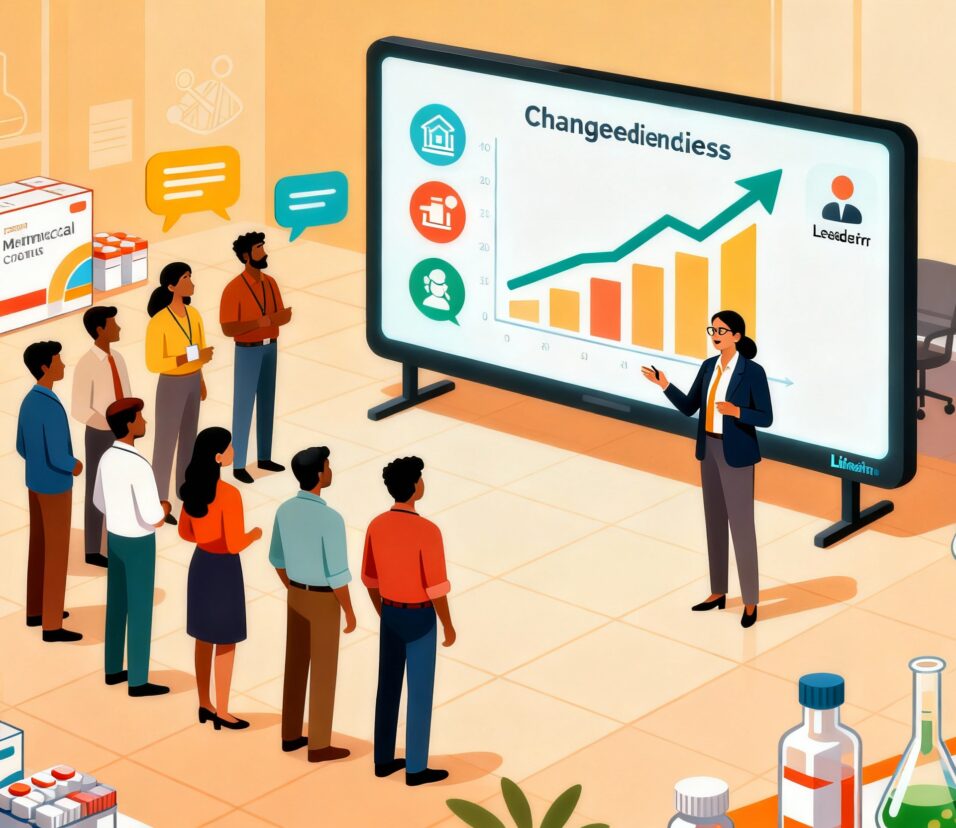
Based on recent studies, employee change readiness in the Indian pharmaceutical sector is significantly influenced by effective human resource practices, transparent communication, and strong leadership.
Industry, currently undergoing rapid transformation due to technological and market shifts, faces challenges like skill gaps and resistance to change that can be mitigated through targeted strategies.

Numerous internal and external factors interact to influence how prepared Indian pharma employees are for organizational change. Key factors include:
- HR and management practices: A strong link has been found between employee engagement and readiness for change, with HR practices partially mediating this relationship. Effective HR management can build positive employee attitudes and foster commitment, making them more receptive to change.
- Transparent communication: Open and honest communication from leadership builds employee trust and reduces uncertainty during transformations. Clearly explaining the rationale and benefits of changes helps reduce fear and resistance.
- Organizational culture and leadership: A supportive and transparent culture, where employees feel empowered and involved in the change process, significantly improves readiness. Active, visible participation from senior leaders is also critical for success.
- Training and skills: A lack of proper training to acquire new skills is a critical barrier to change readiness. To bridge the skill gap caused by technological advancements, companies must invest in continuous learning and reskilling programs.
- Job security and stress: Stress resulting from multiple tasks and perceived threats to job security can negatively impact employee readiness. This is particularly relevant in the post-pandemic landscape, where workforce stability has been a concern.
While research shows that Indian pharma employees are often adaptive, the industry faces specific challenges that can hinder readiness for change:
- Regulatory intensity: Adherence to rigorous and constantly evolving regulatory standards can create a compliance-first culture that suppresses creativity and emotional connection to the work.
- Functional silos: The industry is often organized in silos, with distinct R&D, manufacturing, and sales functions operating in isolation. This structure can limit collaboration and create a fragmented culture.
- Field force disconnection: Pharmaceutical sales representatives are often mobile and geographically dispersed, making them feel disconnected from the central corporate culture and decisions.
- Multigenerational workforce: Indian pharma has a multigenerational workforce with varying levels of digital literacy and communication preferences. Change strategies must be tailored to engage this diverse employee base.
- Data-driven decision making: Despite the increasing importance of data, many organizations still rely on traditional approaches to manage change, ignoring valuable data-driven insights from employee feedback.
To effectively enhance employee readiness and manage change, Indian pharma companies can implement several strategic interventions:
- Purpose-led culture: Reinforce the company’s mission of improving patient health by sharing stories of success and featuring employee contributions. This can increase emotional investment and motivate employees, especially those in less visible roles.
- Data-driven change management: Use data and analytics to assess employee readiness, identify resistance points, and track progress during transformations. Metrics like engagement indices and training completion rates can inform targeted interventions.
- Omni-channel engagement: Move beyond traditional in-clinic detailing to reach employees, especially the field force. Use digital platforms and feedback mechanisms to keep dispersed teams connected to the internal culture and company updates.
- Targeted training and development: Provide role-specific upskilling and reskilling to address new technological requirements. Gamified learning and online modules can make training more engaging and effective.
- Inclusive recognition and rewards: Revamp reward systems to be more inclusive, celebrating the contributions of all functions, including R&D, manufacturing, and compliance. Incentives should motivate the adoption of new skills and behaviors.
- Leadership coalitions: Build strong leadership coalitions to champion change and communicate directly with employees. This prepares managers to be effective sponsors and builds trust with employees.
The study published in International Journal of Academic Research in Business and Social Sciences investigated the impact of employee engagement on organizational performance. The findings suggest that training and development, along with a supportive work environment, are key drivers of employee engagement, which in turn significantly improves organizational performance. Employee engagement partially mediates the effects of work environment, training and development, and rewards and recognition, explaining 34-36% of engagement variance and 33% of performance variance. Surprisingly, rewards and recognition did not significantly affect employee engagement in this study. High engagement improves retention, productivity, employee morale, and a company’s innovation capabilities in a competitive, pandemic-affected market. The research highlights the importance of continuous employee growth initiatives and a positive work climate for sustainable success, recommending that businesses focus investment beyond monetary incentives.
A skilled and prepared workforce is critical for the industry's success and ability to meet its commitments to patients and the market.
-
- by: Create Personal Account
- 3 months ago
Thank you for your sharing. I am worried that I lack creative ideas. It is your article that makes me full of hope. Thank you. But, I have a question, can you help me? https://accounts.binance.info/register-person?ref=IXBIAFVY






Leave feedback about this