

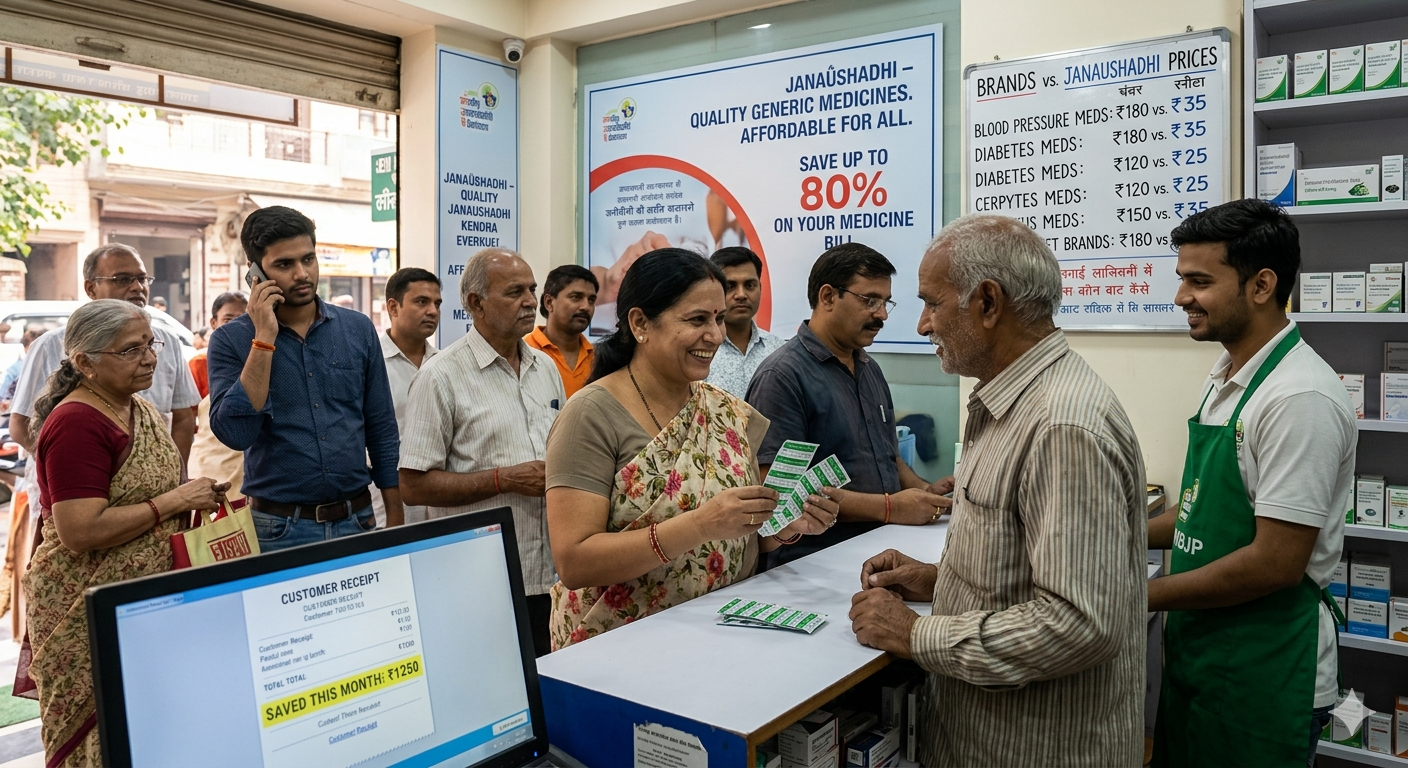
The Truth About Janaushadhi Medicines: What Indian Patients Really Say
- 1 Comment
- 43 Views
Healthcare is one of the very few things in life where we willingly pay a premium, often operating under the assumption that a higher price tag guarantees better odds of recovery. In India, this mindset has historically driven households to spend a massive portion of their income on branded pharmaceutical names.
However, the rapid expansion of the Pradhan Mantri Bhartiya Janaushadhi Pariyojana (PMBJP)—which has scaled to over 10,000 government-backed pharmacies nationwide—is fundamentally challenging how we view medical costs.
For millions of families, these outlets are an economic lifesaver. Yet, for others, lingering skepticism remains. Let’s break down the realities of the generic medicine shift, what holds consumers back, and why the tide is turning toward affordable care.
Evaluating customer attitudes towards the Pradhan Mantri Bhartiya Janaushadhi Pariyojana (PMBJP) provides excellent insights into how India’s massive generic medicine push is performing on the ground.
The 90% Discount: Science vs. Marketing
The most startling aspect of a Janaushadhi outlet is the price tag. Medicines there are consistently 50% to 90% cheaper than the exact same drugs found at private pharmacies.
Understandably, this triggers a natural human bias: If it’s that cheap, can it really be safe?
To understand why the price difference is so steep, we have to look at what you are actually paying for at a standard pharmacy counter:
- Branded Drugs: You pay for intensive field marketing, medical representative networks, corporate packaging, and profit margins added at multiple layers of the supply chain.
- Janaushadhi Generics: You pay strictly for the active chemical ingredient. The government bulk-procures these medicines directly from manufacturers, eliminating middleman logistics, heavy marketing budgets, and commercial brand premiums.
Scientifically, these medicines are required to prove bioequivalence. This means the generic drug must dissolve, enter your bloodstream, and achieve the exact same therapeutic effect as the expensive brand name. It is the exact same molecule, just stripped of its corporate suit..
What Do Everyday Indians Really Think About Janaushadhi Medicines?
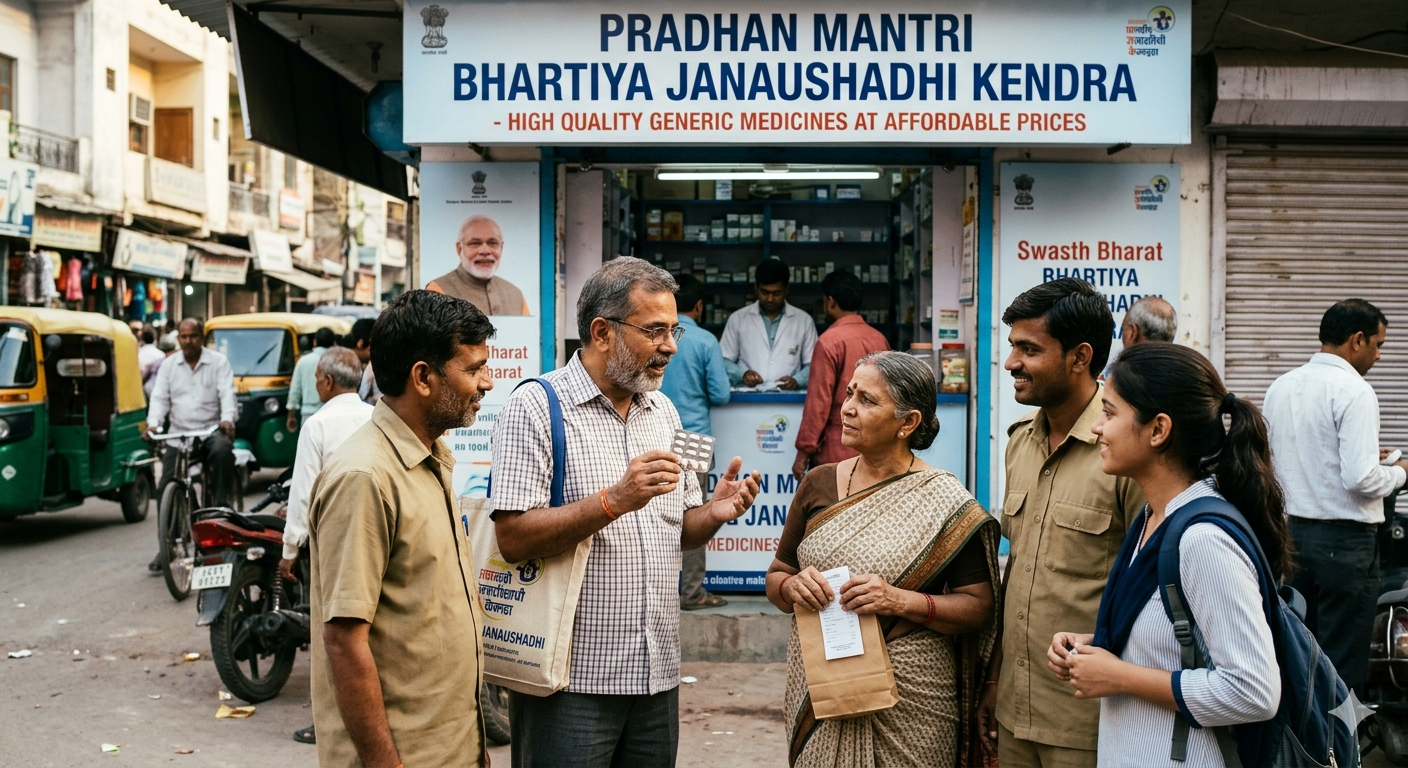
If you step outside any Pradhan Mantri Bhartiya Janaushadhi Kendra in India, you will witness a fascinating psychological tug-of-war.
On one hand, you have people walking out with a month’s worth of diabetes medication, feeling like they just won the lottery because their bill dropped from ₹3,000 to ₹300. On the other hand, you have neighbors down the street who still refuse to step inside, convinced that if a life-saving pill is that cheap, it must be fake or diluted.
Evaluating customer attitudes toward this massive generic medicine push reveals a brilliant mix of deep economic relief and lingering medical anxiety. Here is what is actually going on in the minds of Indian consumers.
Overcoming the "Doctor’s Pen" Dilemma
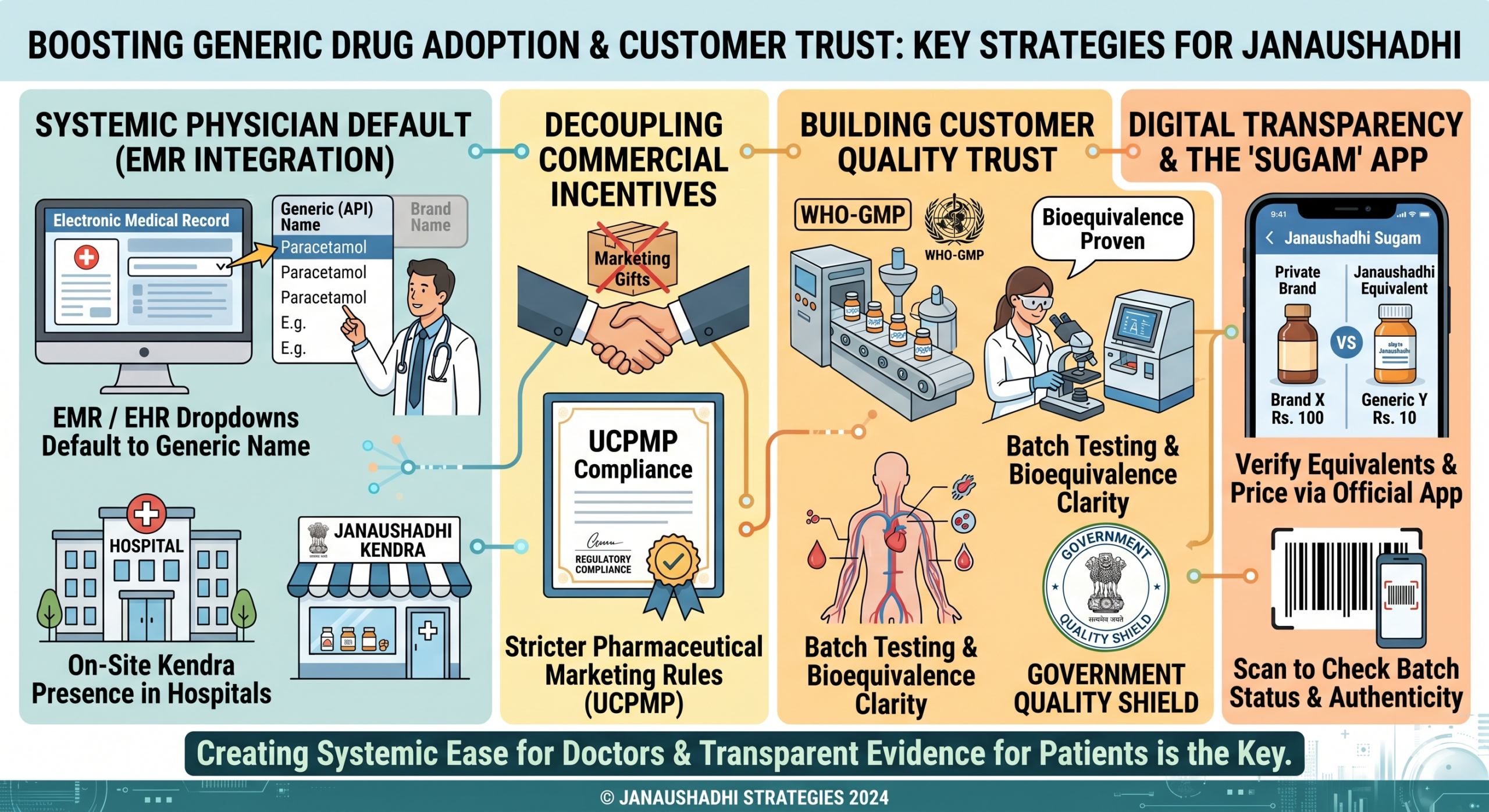
Even when patients want to save money, they face a psychological roadblock: the power of the doctor’s prescription. Patients place immense trust in their healthcare providers. If a doctor writes down a specific brand name out of habit or convenience, patients are understandably terrified to substitute it at a generic counter.
To bridge this trust gap, structural changes are quietly happening behind the scenes:
- Digital Defaults: Hospitals are increasingly adopting Electronic Medical Record (EMR) systems that force dropdown menus to show the generic chemical name rather than a commercial brand.
- On-Site Availability: More government and private medical institutions are opening Janaushadhi booths right on their premises. When a doctor knows the generic option is just down the hall, they are far more likely to prescribe it confidently.
Why the Regulars Love It: The Trust Drivers
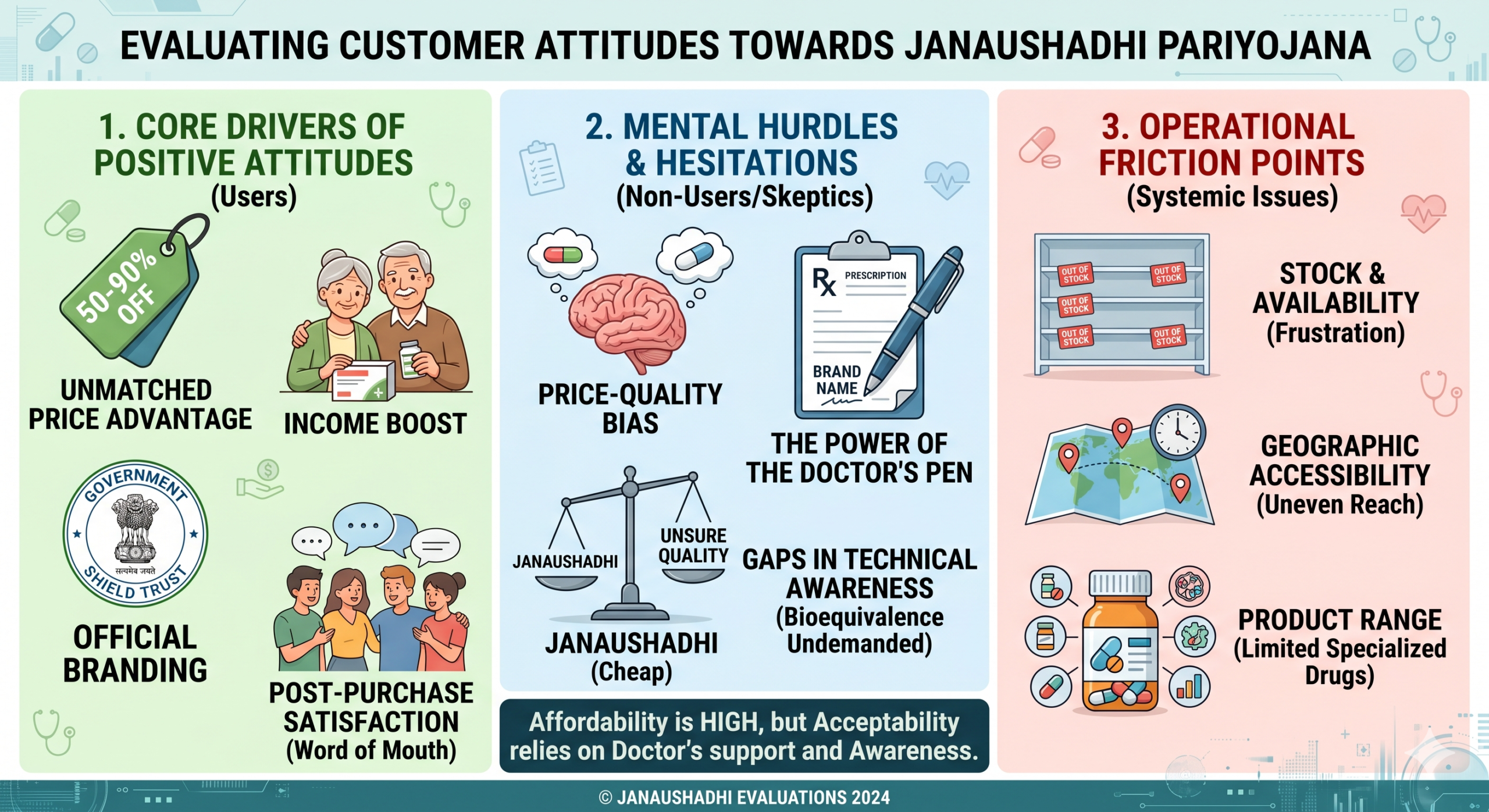
For the millions of families who have made the switch, satisfaction and repeat-purchase rates are incredibly high. Their loyalty is anchored by three major factors:
- An Absolute Lifesaver for the Wallet: This is the obvious one. When a family is managing lifelong conditions like hypertension or diabetes, cutting medicine bills by 50% to 90% isn’t just “saving money”—it functions like a direct salary raise.
- The Power of the Government Stamp: Let’s face it: private unbranded generics face a massive uphill battle with trust in India. But because Janaushadhi stores carry the official Central Government branding, it acts like a psychological shield. Consumers feel secure knowing there is an official regulatory body tracking the quality.
- “Hey, It Actually Works”: The strongest marketing for the scheme isn’t billboards; it’s word-of-mouth. Once a skeptical patient takes the leap and realizes their blood sugar or blood pressure readings stay perfectly stable, they turn into brand advocates, eagerly convincing their relatives and friend circles to make the switch.
Navigating the Growing Pains
While the attitude toward generic affordability is overwhelmingly positive, the system still faces operational hurdles. Regular users frequently note a few key friction points:
- Stock Consistency: Due to massive demand, popular maintenance medications for chronic conditions like diabetes or blood pressure occasionally face temporary stock-outs.
- Specialized Care: While the inventory covers everyday healthcare needs comprehensively, highly specialized treatments—such as specific oncology or advanced psychiatric medications—can still be difficult to find.
The network is actively evolving to fix these supply chain gaps, focusing on automated stock tracking to ensure chronic patients never have to break their treatment cycles.
The Mental Walls: Why Some People Still Hesitate
Despite the obvious cash savings, a huge chunk of the population still walks past these stores with apprehension. Human behavior models highlight three deep-seated bottlenecks:
- The “Cheap Equals Bad” Bias: We are hardwired to believe that you get what you pay for. When consumers look at the simple, non-flashy, basic packaging of Janaushadhi medicines, a subconscious alarm bell goes off. They worry that the raw materials are sub-par or that quality control was skipped to keep costs low.
- The Doctor’s Word is Law: In India, the family doctor’s word is practically sacred. If a doctor pens down a specific, expensive brand name, a patient experiences a massive mental hurdle called “switching costs.” They are simply too terrified of a poor health outcome to contradict their doctor’s prescription at a generic counter.
- The “Bioequivalence” Communication Gap: While almost everyone has heard that “Janaushadhi sells cheap medicine,” very few understand why it’s cheap. The scientific concept of bioequivalence—the definitive proof that a generic molecule acts exactly like a branded one in the human body—has completely failed to reach the public imagination.
The Retail Reality: Where the System Trips Up
Attitudes aren’t just built on science; they are shaped by the actual shopping experience. When regular customers air their frustrations, it usually comes down to three operational pain points:
| What Customers Experience | The Ground Reality |
| The “Out of Stock” Headache | Frustrated. There is nothing more disruptive for a chronic patient than walking into a store only to find their critical daily pill is temporarily unavailable. Being forced to go back to a private pharmacy to buy the expensive brand breaks their trust in the system. |
| The Location Roulette | Mixed. Even with more than 10,000+ Kendras up and running across India, distribution is uneven. For many suburban and rural families, the nearest outlet is simply too far to justify a special trip. |
| The Missing Specialties | Room to Grow. While standard, high-volume medicines are widely available, patients looking for highly specialized treatments—like specific psychiatric formulations or advanced cancer care medications—frequently find them missing from the store shelves. |
The Bottom Line
Choosing generic healthcare isn’t about settling for lower quality; it’s about choosing smarter economics. When backed by the rigorous testing of independent labs and government tracking, generic medicines offer the exact same clinical path to recovery at a fraction of the cost.
Right now, the Janaushadhi scheme has completely won the battle of affordability, but it is still fighting the battle of acceptability. To turn every single skeptic into a believer, the system needs to do two things: make it effortless for doctors to write generic chemical names, and run campaigns that explain why these medicines are cheap without sounding defensive.





Leave feedback about this